Updated: July 2026
Bali Luxury Honeymoon — Bali Vow Renewal Ceremony Guide — Pema…
Bali Luxury Honeymoon is a curated Indonesia luxury tourism experience offered by Bali Luxury Honeymoon Atelier: handpicked routes, vetted operators, transparent pricing, and 24/7 concierge support across Indonesia.
- What makes Bali Luxury Honeymoon a premium experience.
- How Bali Luxury Honeymoon Atelier curates exclusive access and concierge logistics.
- Routes, seasons, and pricing transparency — no hidden fees.
Bali vow renewal ceremony — the complete guide for honeymoon couples.
What a Pemangku-led blessing actually looks like. Four ceremony venues. Costume and gesture protocol. The difference between Melukat purification and full vow renewal — and which one you should book. Bali tourism portal
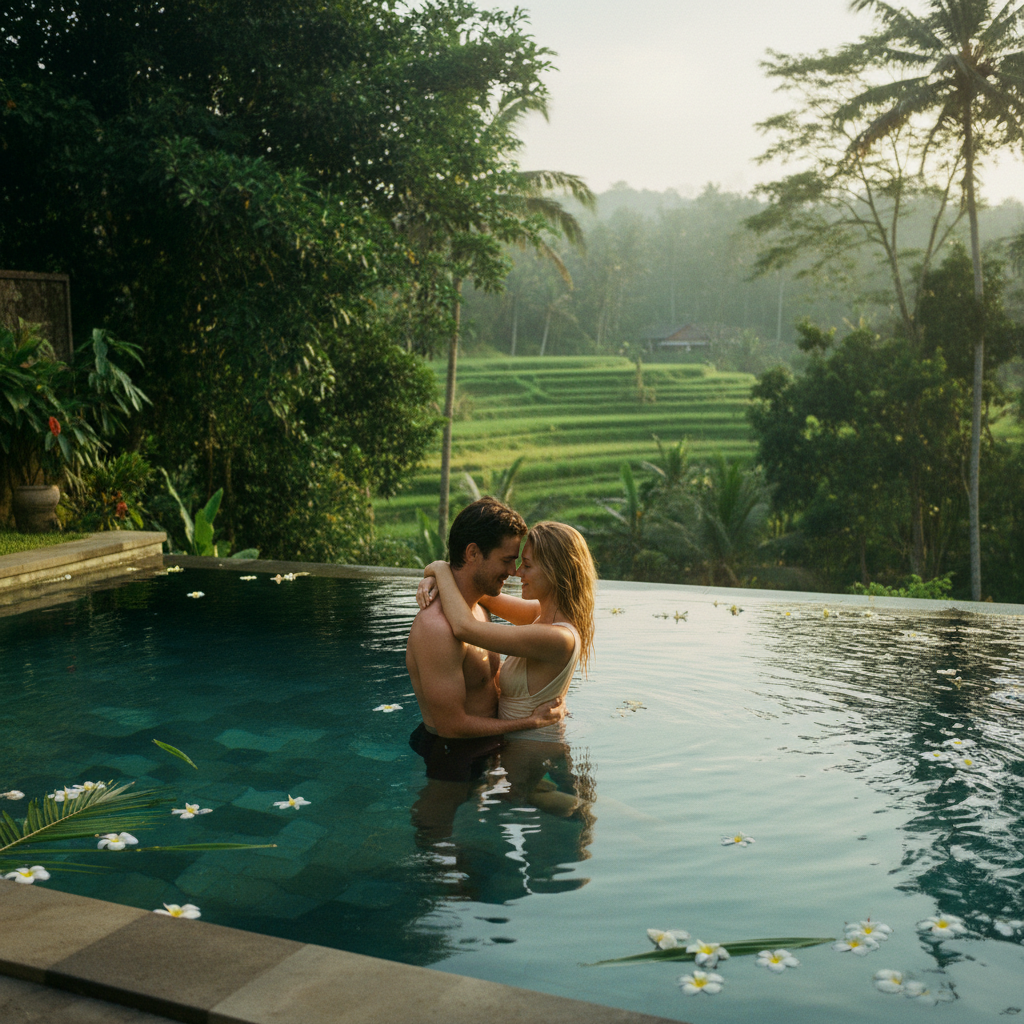 Bali vow renewal ceremony with Pemangku Hindu priest blessing honeymoon couple at temple courtyard with sacred water rice grains and flower offerings”/>
The lede — why a Bali vow renewal feels different
Western chapel renewals tend toward formality — same vows, same setting, same tradition the couple already know. A Bali Hindu vow renewal does something else. The Pemangku — a Balinese Hindu lay priest — performs a rite that is non-denominational but spiritually substantive, blessing the couple with sacred water, rice grains pressed to the forehead, and flower-petal benediction while reciting Sanskrit mantras. The ceremony is mostly silent on the couple’s side. You sit, you listen, you receive. By the end most couples report a quietness they did not feel at the original wedding. That is the appeal. The ceremony is also entirely portable — it can be staged in a temple courtyard, on a private beach, in a villa garden, or at a sacred water spring — which means it can be tailored to the couple’s preferred setting without compromising the rite. As the Wikipedia article on Tourism in Bali documents, the island’s hospitality economy has matured for nearly a century, and ceremony tourism is one of its quieter, more refined chapters.
The four ceremony venues we book
Sacred water temple — Tirta Empul or Pura Beji. The most spiritually charged setting. The couple bathes (waist-deep, modest costume provided) in the temple spring before the Pemangku performs the blessing. Available subject to village permit and quiet-day timing. Most photographed venue. Best for couples who want the rite to feel like a pilgrimage moment.
Beachfront — Jimbaran sand altar or Nusa Dua hidden cove. A sand altar is built fresh each ceremony, with candles, flowers, and a Pemangku-blessed water vessel. The couple sits cross-legged on woven mats facing the ocean. Best for sunset rites. The Atelier handles tide and timing so the rite peaks as the sun lands on the horizon.
Villa garden ceremony. Held entirely inside the villa property — no public access, full privacy. Most popular among Reserve-tier couples. The Pemangku arrives, blesses the chosen ceremonial corner of the garden, and performs the rite there. Photography by the Atelier-arranged photographer with no constraints.
Cliff-temple courtyard — Uluwatu or Tanah Lot adjacent. Held in a private courtyard adjacent to the famous temples. The drama of the cliff and ocean is the backdrop; the rite itself is performed in a controlled setting. Best for couples who want the temple grandeur without the crowds. Detailed comparison of cliff versus highland venues in our Ubud versus Uluwatu honeymoon comparison.
Melukat purification versus full vow renewal — which to book
Melukat is a Balinese Hindu purification ritual — sacred-water cleansing performed at a temple spring or water source. It runs 45 to 60 minutes, includes prayers but not vows, and is symbolically about washing away accumulated burden before a new chapter. The Atelier books Melukat as an Atelier-tier add-on or as a precursor to a full vow renewal on a Reserve-tier itinerary. Full vow renewal is a different rite — it includes the Melukat purification and adds the formal couple’s blessing with mantra, garland exchange, and the seven-step circumambulation borrowed from Hindu wedding tradition. It runs 90 to 120 minutes. Most couples who travel specifically for ceremony book the full version. Couples on a polished honeymoon who want a meaningful ceremonial moment without the full rite often pick Melukat. The Atelier discovery call usually settles which one is right within 15 minutes.
Costume protocol — what to wear
For temple venues, traditional Balinese ceremonial dress is required — sarong, sash, and white or cream upper garment. The Atelier provides costume rental and wardrobe team on the morning of the ceremony. Couples bring nothing. For beachfront and villa venues, dress code is lighter — modest cream or white linen is appreciated, but full traditional dress is not required. Bare shoulders are acceptable on private property; covered shoulders are required at temples. We brief on the dress code 14 days before the ceremony so any tailoring or laundry concerns are handled in advance.
Gesture protocol — what the couple does during the rite
The Pemangku leads. The couple sits cross-legged or kneels on woven mats facing the priest. Hands are folded in prayer position (sembah) when invited. Sacred water is poured three times into your cupped hands — drink first, splash on the face second, smooth over the head third. Rice grains are pressed to the forehead, throat, and chest in turn. A jasmine garland is exchanged between the couple. The Pemangku recites the closing mantra. Most couples find the rhythm intuitive once it begins; the Atelier brief covers each phase in advance so the moment feels prepared, not improvised. Couples who want the broader village context to the rite can read about the surrounding Balinese Hindu calendar in our best time for Bali honeymoon guide.
Photography rules during the ceremony
Photography rules vary by venue. At public temple settings, photography is permitted from designated viewing positions only — no flash, no movement during prayer phases, and the priest’s permission must be obtained for close shots. At private villa and beach ceremonies, photography is unrestricted. The Atelier-arranged photographer is briefed on the protocol of each venue and never crosses the priest’s choreography. Couples who want full-coverage photographs typically pick the villa garden or beachfront venue. Couples who want pilgrimage-style images pick the temple. The Reserve tier includes the Atelier ceremony photographer; Atelier-tier couples can add the photographer for $1,400.
Cost breakdown — what you actually pay
A full vow renewal ceremony with Pemangku, costume rental, sand altar or temple permit, and ceremony coordinator runs $2,800 to $4,200 depending on venue. Photographer adds $1,400. Videographer adds $1,200. Helicopter scenic transfer to a remote venue adds $2,400. Private dinner that evening at a cliff-edge restaurant runs $400 to $750 per couple. The Atelier Reserve tier ($18,000) includes the full ceremony, photographer, helicopter, and cliff-edge dinner bundled. The Atelier base tier ($8,500) does not include the ceremony but you can add the full vow renewal package for $3,200 as an upgrade.
Booking lead time and ceremony date availability
Reserve-tier ceremony slots fill 6 to 9 months ahead during dry season (April-October). Atelier ceremony add-ons are usually available 4 to 6 weeks ahead. Public temple permits require 14 to 30 days lead time depending on the village. Nyepi (Day of Silence, March each year) is a full island shutdown — no ceremony available. Galungan and Kuningan periods (every 6 months on the Balinese calendar) are also restricted because Pemangku priests are dedicated to village ceremonies during these windows. The Atelier calendar tracks all of these and routes you accordingly. Detailed monthly availability in our monthly Bali honeymoon guide.
After the ceremony — what couples often want next
The most common post-ceremony rhythm is a quiet evening — a private dinner at the villa or a sunset cliff-edge restaurant. Couples typically do not want a busy program the night of the ceremony. The Atelier reserves the day after for unstructured time — late breakfast, spa, a long pool float, an afternoon nap. Couples on the Reserve tier often follow with a helicopter scenic transfer the next morning to a contrasting setting (Ubud highlands if the ceremony was coastal; coastal cliff if it was inland). The pacing is calibrated so the ceremony lands as the emotional peak of the seven days, not a checkbox tucked into a busy schedule. See also our Indonesia-wide planning at indonesiahoneymoon.com for couples who want to extend the ceremony with a multi-island finish.
Why book through the Atelier rather than direct
Bali ceremony coordinators exist outside the Atelier. Some are excellent. The reason most couples book through us is timing and continuity — the planner who designed your itinerary is the same one who books the Pemangku, briefs you on protocol, and is on WhatsApp the morning of the rite. We do not subcontract the ceremony to a third-party desk. We do not let language barriers cause confusion on the day. We do not promise statue access or private temple keys we cannot deliver. What we do is brief, choreograph, and witness. The 127 couples who completed the rite with us delivered the 4.9 rating that anchors the planning service.
Plan your Bali vow renewal
Pemangku-led full ceremony or Melukat purification. Four venue options. Atelier ceremony coordinator from start to finish.